Language acquisition thrives on context. Years ago, while working with students transitioning into immersive English environments, I noticed that memorizing vocabulary lists rarely translated to confident speech at the dinner table or the checkout counter. The missing link was structured, contextual practice.
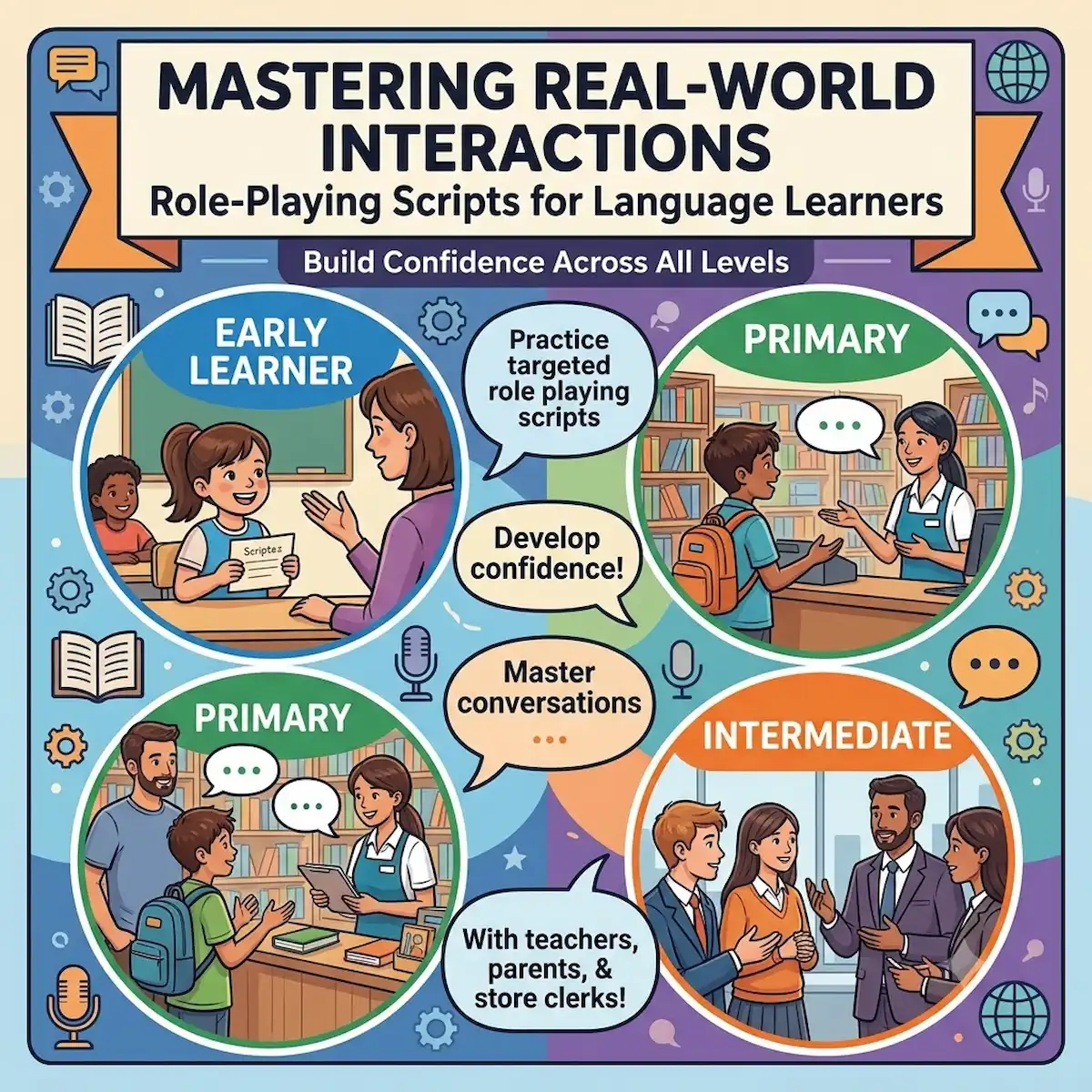
By utilizing targeted role playing scripts, learners can bridge the gap between abstract grammar and real-world application. Below are three tiers of role playing scripts engineered for early learners, primary students, and intermediate speakers. Each tier features three distinct daily scenarios: student-to-teacher, student-to-parent, and student-to-store attendant.
Tier 1: Early Learner Role Playing Scripts
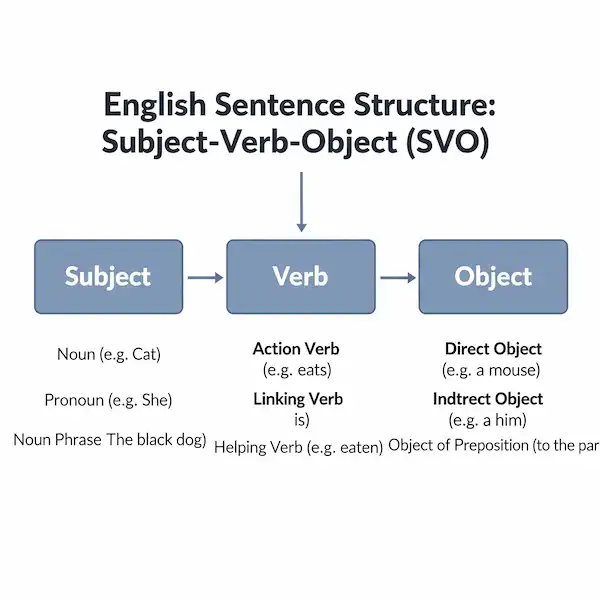
These scripts focus on high-frequency, simple sentence structures ($Subject + Verb + Object$) and essential vocabulary. They are designed to build foundational confidence.
Scenario A: Student and Teacher (The Morning Check-In)
- Teacher: Good morning, Leo! Welcome to the classroom. How are you today?
- Student: Good morning, Mr. Davis. I am happy today. Look at my new red shoes!
- Teacher: Wow, those are very bright! Did you choose them yourself?
- Student: Yes! My dad bought them for me. We practice using our role playing scripts in the car so I could tell you about them in English.
- Teacher: That is wonderful, Leo! Your pronunciation sounds excellent. Let’s hang up your coat and get ready for circle time.
Scenario B: Student and Parent (After-School Snack Time)
- Parent: Welcome home, Maya! How was your morning at preschool?
- Student: It was fun, Mommy! We played with blocks and painted a big green tree.
- Parent: I love that. Are you hungry? I have some apple slices ready for you.
- Student: Yes, please! Can I have some water too? I practiced speaking nicely today.
- Parent: You certainly did. Our evening role playing scripts are really helping you ask for things politely. Here is your water.
- Student: Thank you, Mommy! The apples are very sweet.
Scenario C: Student and Store Attendant (Buying a Toy)
- Store Attendant: Hello there! Can I help you find something today?
- Student: Hello. I am looking for the little blue toy cars.
- Store Attendant: Ah, the racing cars are right here on the bottom shelf. See them?
- Student: Yes! Thank you. How much is this blue one, please?
- Store Attendant: That one is exactly two dollars.
- Student: Perfect. Here are two dollars. I knew exactly what to say because of my home role playing scripts.
- Store Attendant: You did a fantastic job paying all by yourself. Have a great day!
Tier 2: Primary Learner Role Playing Scripts
Primary learners possess a broader vocabulary and can handle compound sentences. These scripts introduce basic turn-taking nuances, polite interruptions, and descriptive language.
Scenario A: Student and Teacher (Asking for Homework Clarification)
- Student: Excuse me, Mrs. Gable? Do you have a quick moment before the lunch bell rings?
- Teacher: Of course, Sophie. What can I help you with?
- Student: I am a bit confused about the science project instructions on page 42. Do we need to draw the plant cells or find photos online?
- Teacher: You can do either, Sophie! The goal is simply to label the cell wall and the nucleus clearly.
- Student: Oh, I understand now. I am glad we practiced these classroom role playing scripts at home because I used to feel too nervous to ask questions.
- Teacher: Never be afraid to ask, Sophie. Seeking clarification is exactly how we learn!
Scenario B: Student and Parent (Negotiating Screen Time)
- Student: Hey Dad, I finished my math worksheet and packed my backpack for tomorrow morning.
- Parent: Good job, Sam. Thank you for taking care of your responsibilities without being asked.
- Student: Since my chores are done, would it be alright if I played video games for thirty minutes before dinner?
- Parent: You’ve earned it, Sam. But remember our rule: when the timer goes off, the console gets turned off immediately.
- Student: Deal! I appreciate that we can talk through this using our communication role playing scripts instead of arguing about it.
- Parent: Me too, son. Go enjoy your game.
Scenario C: Student and Store Attendant (Finding a Specific Book)
- Store Attendant: Welcome to Page-Turner Books. Are you searching for a specific title or just browsing our shelves today?
- Student: Hi! I am looking for the second book in the Percy Jackson series. I looked in the fiction section but couldn’t find it.
- Store Attendant: Let me check our inventory computer system real quick. Ah, it looks like the last copy on the shelf was sold this morning, but we have one more in the back storage room.
- Student: Oh, that is amazing news! Could you please grab it for me?
- Store Attendant: Absolutely, give me just one minute to go get it for you.
- Student: Thank you so much. Using role playing scripts to practice asking store employees for help makes this so much easier.
- Store Attendant: Here you go! Enjoy your reading.
Tier 3: Intermediate Learner Role Playing Scripts
Intermediate dialogues feature idiomatic expressions, complex sentence structures, conditional clauses, and varying emotional tones like persuasion or troubleshooting.
Scenario A: Student and Teacher (Proposing an Extracurricular Club)
- Student: Good afternoon, Profe. I wanted to pitch an idea to you regarding an after-school program I’d love to launch this semester.
- Teacher: I’m always open to student initiatives. What do you have in mind?
- Student: I want to start a conversational English circle. I noticed that while my peers understand grammar principles, they freeze up during spontaneous conversations. I want to build a library of interactive role playing scripts to help them practice realistic, everyday scenarios.
- Teacher: That is a remarkably thoughtful idea. We could host it in my classroom on Thursday afternoons. Have you drafted a formal proposal for the principal yet?
- Student: I have a rough outline ready. I used our advanced role playing scripts to practice pitching this concept to my older brother last night so I could present it clearly to you today.
- Teacher: Your preparation shows. Bring me the draft tomorrow morning, and we will refine it together before submitting it to administration.
Scenario B: Student and Parent (Discussing a Low Test Score)
- Student: Mom, do you have a few minutes to talk? I just got my chemistry midterm back, and it wasn’t the grade I was hoping for.
- Parent: Thanks for telling me directly. Let’s take a look. A C-minus? I know how hard you studied for this, so what do you think happened?
- Student: I think I completely mismanaged my time during the multi-step problem section. I got stuck on the second equation and panicked, which left me with only five minutes for the final essay question.
- Parent: That sounds incredibly stressful. I’m glad we used our problem-solving role playing scripts in the past so we can discuss this calmly rather than reacting with anger. What is your game plan to bounce back?
- Student: I’m going to attend the teacher’s office hours on Tuesday, and I was wondering if we could look into a local tutor to help me practice pacing myself during mock exams.
- Parent: That sounds like a solid, proactive strategy. Let’s research some highly rated tutoring options online tonight.
Scenario C: Student and Store Attendant (Returning a Defective Item)
- Store Attendant: Hi, welcome to ElectroShack. What can I do for you today?
- Student: Hello. I’d like to return this pair of noise-canceling headphones that I purchased here last Friday. Unfortunately, the left earbud keeps disconnecting from Bluetooth every few minutes.
- Store Attendant: I’m sorry to hear that. Do you happen to have the original purchase receipt and the packaging materials with you?
- Student: Yes, I kept everything. Here is the receipt, and the box is completely intact. If possible, I would prefer to exchange them for a brand-new working pair rather than getting a store credit refund.
- Store Attendant: Let me check our shelves. Yes, we have three of this exact model left in stock. I can process this even exchange for you right away at no extra charge.
- Student: That is perfect. I always find returns a bit intimidating, but reviewing consumer role playing scripts ahead of time gave me the confidence to explain the defect clearly.
- Store Attendant: You made the process incredibly easy for me by having your paperwork ready. Here is your exchange receipt and your new headphones. Have a great afternoon!
The Core Value of Communication Drills
The dialogues above demonstrate how structured linguistic frameworks help students build conversational stamina. When learners regularly engage with role playing scripts, they gradually shift away from mental translation and move closer to natural fluency.
To expand your teaching toolkit or find more structured dialogue frameworks, you can explore the extensive language pedagogy archives via the U.S. Department of Education or review verified structural language guidelines managed by the British Council. These resources offer excellent theoretical foundations to complement your practical, hands-on classroom activities.
Additional Helpful Information
- Learning more about listening strategies – English Listening Strategies: Accents & Context
- More about English Learning Activities – English learning activities