Welcome to the Playground: Your Guide to Natural English
Have you ever noticed how your favorite cartoon characters or storybook friends talk? They do not always say things the way we read them in a school textbook. When you first start learning, you learn clear, formal sentences. That is perfect for passing a spelling test or writing a neat essay. But when you step onto the school playground or chat during lunchtime, real conversation sounds a little bit different.
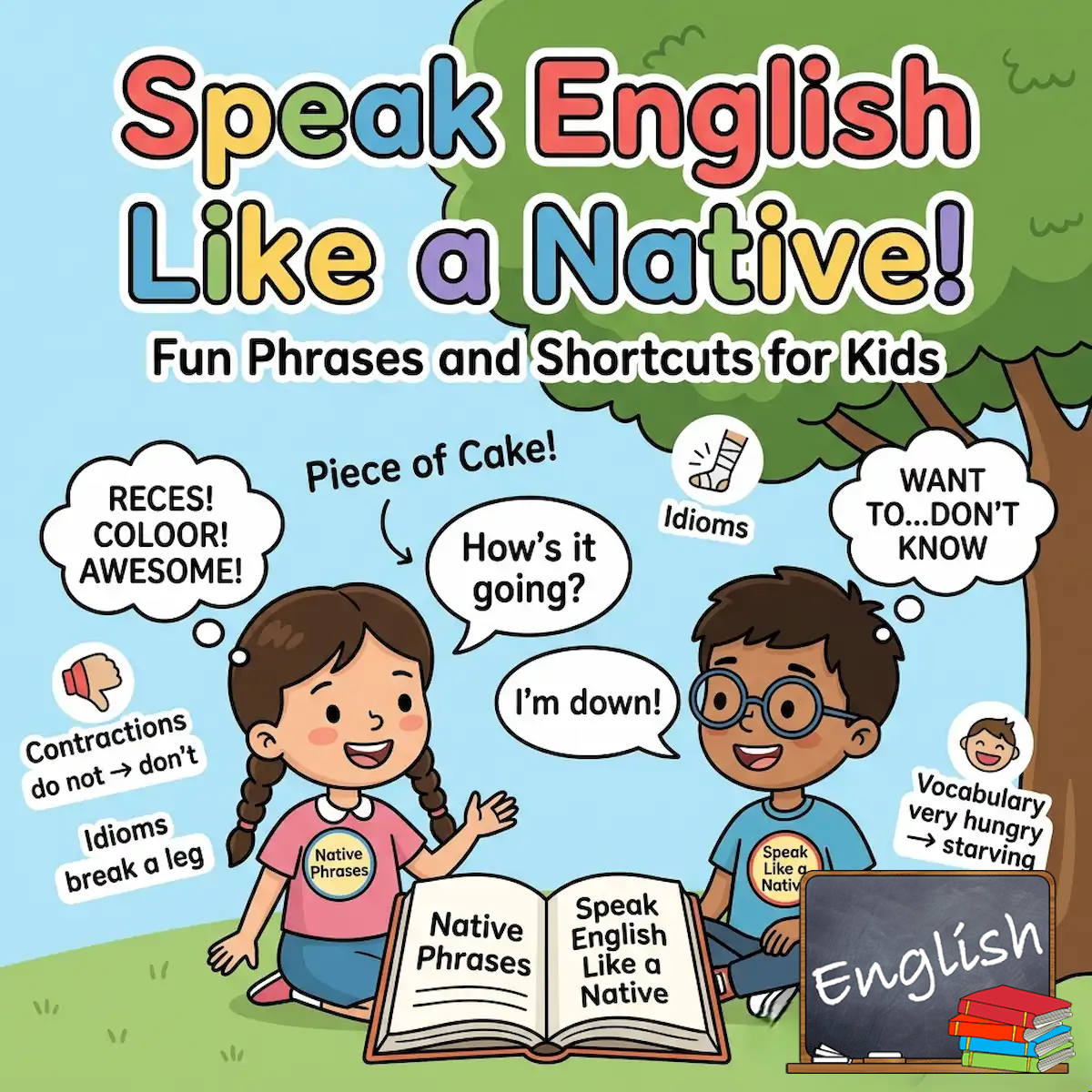
If you want to know how to speak English like a native speaker, you do not need to memorize bigger, harder words from a giant dictionary. You just need to learn a few simple shortcuts, fun phrases, and natural rhythms that native speakers use every single day. When kids practice these small changes, they quickly learn to speak English like a native without studying for hours.
Let us explore some simple secrets that will change your daily conversations completely.
The Big Secret: Shortcuts and Contractions
When people speak their native language, they like to move their mouths quickly. They slide words together to save time. In your English lessons, your teacher might ask you to write out two separate words: “do not” or “I am.” When you speak, however, you can glue them together. These are called contractions.
Using contractions is the fastest way to instantly change your speech from sounding like a stiff robot to a natural friend. It is one of the easiest steps you can take to speak English like a native in front of your classmates.
Daily Shortcuts Chart
Look at how these simple words change when we speak them aloud during class or playtime:
| What Your Textbook Says | What a Native Speaker Says | How It Sounds in a Real Sentence |
| I am fine. | I’m fine. | “I’m fine, thanks for asking!” |
| What is that? | What’s that? | “What’s that cool toy in your backpack?” |
| Do not touch. | Don’t touch. | “Don’t touch the wet paint on the bench!” |
| We are ready. | We’re ready. | “We’re ready to play soccer now.” |
| They will help. | They’ll help. | “They’ll help us find our lost ball.” |
| She is running. | She’s running. | “She’s running so fast today!” |
If you practice saying the words on the right side of the chart, you will find that your sentences flow much better. It feels great when you can speak English like a native by using simple contractions during recess.
Swapping Basic Phrases for Native Phrases
Let us look at some common things you say every single day. If you use a basic phrase, people will understand you perfectly. But if you use a native phrase, you will sound like you have been speaking the language your entire life. Any primary student can learn to speak English like a native by practicing these simple swaps.
1. Saying Hello and Goodbye
Instead of always using the same standard greetings from Chapter 1 of your textbook, try changing up your mornings with these varieties. If you want to speak English like a native from the moment you wake up, start your day with these friendly options.
| Basic Phrase | Native Phrase | Why It Works |
| How are you? | How’s it going? | This feels friendly and relaxed. |
| I am fine, thank you. | I’m good, how about you? | It keeps the conversation moving back and forth like a ball game. |
| Goodbye. | Catch you later! or See ya! | It shows that you plan to hang out again very soon. |
2. Sharing How You Feel
Sometimes you are tired, sometimes you are happy, and sometimes you are just really full after lunch. Here is how to express those feelings naturally:
| Basic Phrase | Native Phrase | What it actually means |
| I am very tired. | I’m exhausted. or I’m beat. | Your energy is completely gone. |
| I am very hungry. | I’m starving! | You are ready for a big snack right away. |
| I understand you. | I get it. | You know exactly what your friend means. |
| I do not know. | I have no clue. or Beats me. | You are totally unsure of the answer. |
3. Playing and Hanging Out
When it is time for recess, you do not want to sound like a formal business worker. You want to sound ready for fun! Learning playground vocabulary is a wonderful way to speak English like a native with your best buddies.
| Basic Phrase | Native Phrase | Playground Example |
| Let us start the game. | Let’s get started! | “Everyone is here, so let’s get started!” |
| Wait a minute. | Hang on a second. | “Hang on a second, I need to tie my shoe.” |
| I want to play later. | I’m down for later. | “I’m down for basketball after lunch.” |
| That is very good. | That’s awesome! or Cool! | “You got a new game? That’s awesome!” |
Fun Idioms for Kids
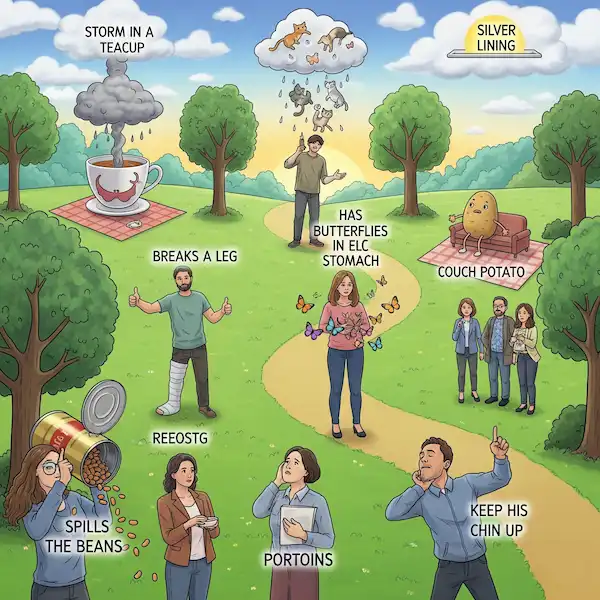
An idiom is a phrase where the words mean something totally different from their literal definitions. If a native speaker tells you to “break a leg” before a school play, they do not want you to go to the hospital! They are actually wishing you good luck. Learning these expressions is a massive step if you want to speak English like a native.
Here are four incredibly common idioms that primary students can use at school to speak English like a native:
Piece of Cake
- What it sounds like: A delicious slice of birthday cake.
- What it actually means: Something is super easy to do.
- How to use it: “That math homework was a piece of cake! I finished it in five minutes.”
Once in a Blue Moon
- What it sounds like: The moon turns a bright blue color in the night sky.
- What it actually means: Something happens very rarely or almost never.
- How to use it: “My family goes to the big amusement park once in a blue moon.”
Under the Weather
- What it sounds like: Standing underneath a raincloud or a big gust of wind.
- What it actually means: Feeling a little bit sick or tired.
- How to use it: “Timmy is not at school today because he is feeling under the weather.”
Hit the Sack
- What it sounds like: Punching a literal bag of potatoes.
- What it actually means: Going to sleep because you are tired.
- How to use it: “It is past nine o’clock, time for me to hit the sack!”
Three Golden Rules to Speak English Like a Native
How do we put all of these charts and phrases into practice? To truly speak English like a native, you should follow three easy playground rules:
Rule 1: Listen to the Music of the Language
Languages have a rhythm, almost like your favorite song. Native speakers do not say every word with the same strength. They make important words sound a bit louder and longer, while small words disappear. Learning this rhythm makes it much easier to speak English like a native.
- Instead of saying: I… WANT… TO… GO… TO… THE… PARK.
- Try saying it like a smooth wave: I want to go to the park.
You can listen to excellent examples of kids’ speech rhythms on the official PBS KIDS Video Platform, which features educational shows designed for primary learners. Listening to other children talk on these programs is a fantastic way to copy their style and speak English like a native.
Rule 2: Do Not Be Afraid to Make Mistakes
In my primary classroom, the students who learn to speak English like a native the fastest are the ones who laugh at their mistakes and keep trying. If you say a phrase slightly wrong, a friend will usually help you out, and you will remember the right way next time. Every single mistake is just a stepping stone that helps you speak English like a native over time.
Rule 3: Use the “Copycat” Strategy
When you watch a cartoon, listen to a kid’s podcast, or hear your teacher talk, pause for a second and repeat what they said out loud. Try to copy their exact tone of voice. Did their voice go up at the end of a question? Did they sound super excited? Copying real speakers helps your brain build the muscles needed to speak English like a native.
To learn more about how native accents work, you can explore the Cambridge Dictionary Pronunciation Guides, which give audio examples for both UK and US English words so you can hear the differences yourself. Using these guides regularly will train your ears to speak English like a native.
Interactive Playground: Try It Out!
Let us see how well you can spot the differences between textbook language and playground language. Read the conversation below between two school friends, Leo and Mia.
Leo: “Hello, Mia. How are you today?”
Mia: “I am fine, Leo. I am very excited because my mother bought a new dog yesterday.”
Leo: “That is very good news. Wait a minute, what is its name?”
Mia: “I do not know yet!”
That sounds okay, but it feels a bit stiff. Let us rewrite their exact conversation using our new native shortcuts and phrases from the charts above so they can speak English like a native:
Leo: “Hey, Mia! How’s it going?”
Mia: “I’m good, Leo! I’m super excited because my mom got a new dog yesterday.”
Leo: “That’s awesome! Hang on a second, what’s its name?”
Mia: “I have no clue yet!”
See how much more alive the second conversation feels? It shows how easy it is to speak English like a native when you change just a few tiny words.
Summary Checklist for Daily Practice
To make sure you keep improving every single day, look at this quick checklist before you start your school day:
- [ ] Did I use at least three contractions today (like I’m, don’t, or what’s)?
- [ ] Did I greet my friends with a natural phrase like “How’s it going?” or “What’s up?”
- [ ] Did I use a fun idiom when describing something easy or rare to speak English like a native?
- [ ] Did I practice copying a native speaker’s voice rhythm during a video or story?
If you want to continue practicing your reading and vocabulary with free books and interactive games made specifically for primary school students, you can check out the resources provided by Oxford Owl for Home, an educational site from Oxford University Press.
Here is a PDF worksheet you can download to practice speaking English like a native:
Learning to speak English like a native is an exciting journey that takes time, but by changing just a few small words every single day, you will surprise your teachers, your parents, and your classmates with how natural you sound. Keep practicing, have fun with your new phrases, and catch you later!
Additional Helpful Information
Learn about classroom language – Mastering Classroom Language: Your Secret Superpower for School Success