Welcome to our learning classroom! Every day, we explore how words help us share our thoughts, tell stories, and describe the world. One of the absolute best ways to make your speaking and writing exciting is to learn how words match up with each other.
Have you ever noticed that the world is full of things that balance each other out? The sun comes up and gives us daylight, and later, the moon shines in the dark night sky. You might have a large dog that barks loudly, or a tiny kitten that purrs softly.
In our language lessons, we have a very special name for these word pairs. When we look for words that have a meaning completely contrary to another word, we are looking for antonyms. Learning these pairs is like finding the missing puzzle pieces to your vocabulary! Let us dive in together and discover how a handy opposite words list can make you a superstar storyteller.
What Are Opposites?
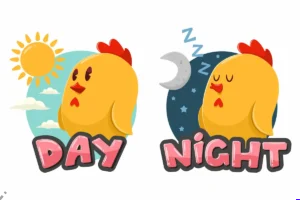
An antonym is just a big, fancy language word for a simple idea. It means a word that has a meaning completely contrary to another word.
Think about when you play a game of Simon Says. If Simon says to stand up, what is the contrary action? It is to sit down! If a bucket is not full of water, it is empty. These pairs are opposite words.
By understanding these matches, you can paint clear pictures in the minds of the people listening to you or reading your school paragraphs. Instead of just saying a story character is nice, you can show how they are nice by contrasting them with a character who is mean.
Why Should We Use Opposite Words?
When you first learn to write sentences in primary school, it is easy to use the same words over and over. You might say, “The cat was big. The house was big. The tree was big.”
But if you look closely at your writing, you can use opposites to show just how special each item truly is! Let us look at three reasons why knowing an opposite words list helps our primary school minds grow:
- Better Descriptions: It helps you explain things accurately. If you want to talk about ice cream, you can say it is cold, which is different from a hot bowl of soup.
- Clear Choices: It helps you make decisions. Do you want to walk fast or slow? Is your homework easy or hard?
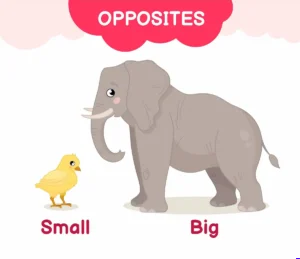
- Fun Comparisons: It lets you show how two things are different. An elephant is big, but a little chick next to it is small.
Our Big Primary School Vocabulary Charts
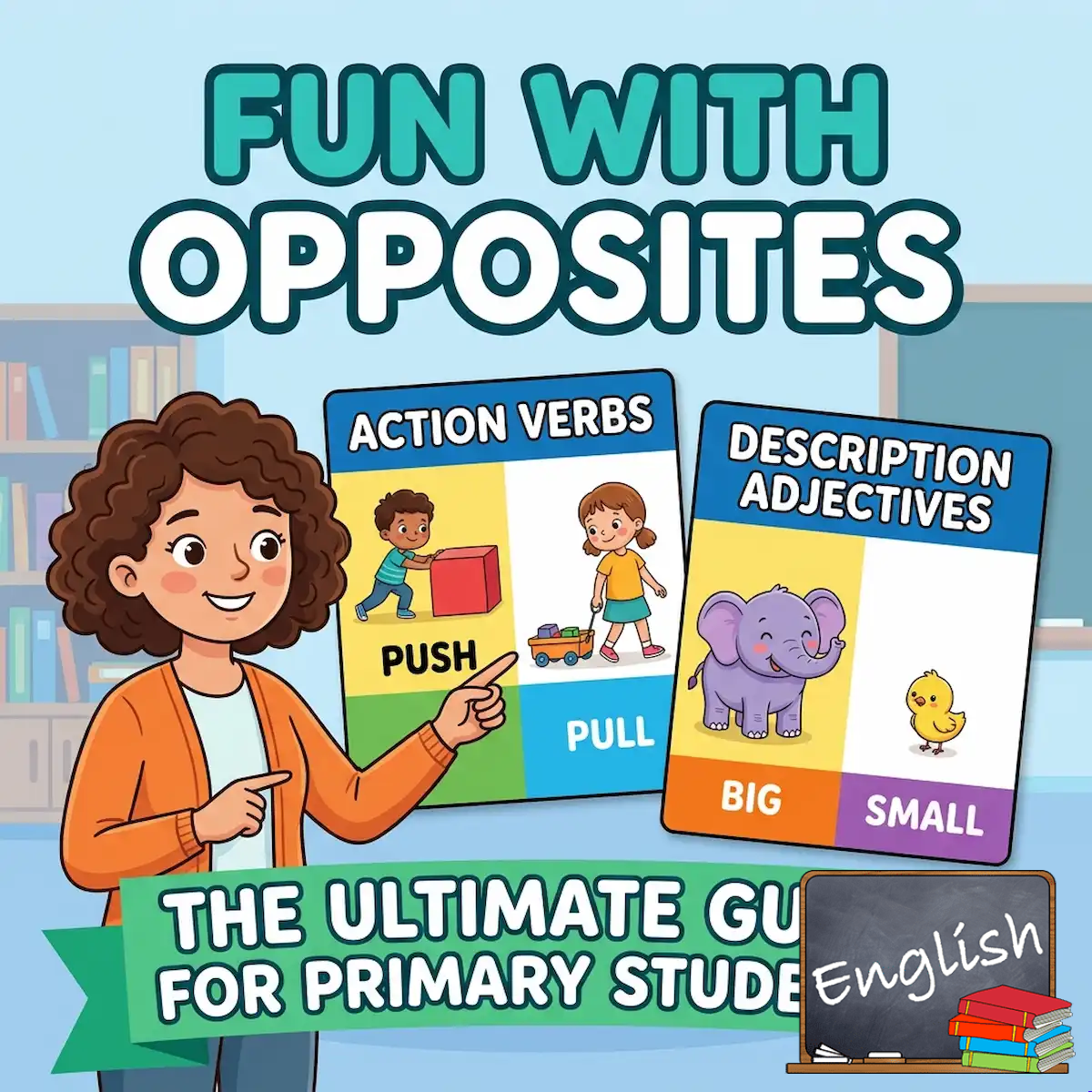
To make it super easy to learn, I have built several vocabulary charts for you. These are split into different categories so you can choose the perfect opposite words for your next writing project.
Action Words (Verbs)
Verbs are action words that show what someone or something is doing. Look at how these actions balance each other out perfectly:
| Action Word | Opposite Words | Sentence Example for Practice |
| Push | Pull | You must push the swing forward, then pull it back safely. |
| Laugh | Cry | The funny clown made us laugh, but the sad movie made us cry. |
| Open | Close | Please open the front window and close the back door. |
| Float | Sink | Heavy rocks sink to the bottom, but light plastic toys float. |
| Remember | Forget | I always try to remember my homework so I do not forget it. |
| Build | Destroy | The kids like to build block towers and then destroy them. |
| Lose | Find | If you lose your green pencil, I will help you find it. |
| Whisper | Shout | We whisper quietly in the library but shout on the playground. |
| Freeze | Melt | Ice will freeze in the cold winter air and melt in the sun. |
| Arrive | Leave | The yellow school bus will arrive at eight and leave at three. |
Description Words (Adjectives)
Adjectives are words that describe nouns (people, places, and things). These pairs help us show exactly what things look like, feel like, or sound like:
| Description Word | Opposite Words | Sentence Example for Practice |
| Bright | Dim | The sunshine is very bright, but the candlelight is dim. |
| Heavy | Light | The giant boulder is heavy, but a bird feather is light. |
| Smooth | Rough | The glass marble is smooth, but the tree bark feels rough. |
| Sharp | Dull | Use the sharp pencil for drawing because that one is dull. |
| Clean | Dirty | Wash your dirty hands in the sink to make them clean. |
| Sweet | Sour | Honey tastes perfectly sweet, but a fresh lemon is sour. |
| Brave | Scared | The brave knight faced the dragon while the mouse felt scared. |
| Wide | Narrow | The highway is very wide, but the forest path is narrow. |
| Hard | Soft | The wooden desk is hard, but the blue pillow is soft. |
| Early | Late | Tim arrived early for the party, but his cousin was late. |
Place and Direction Words (Adverbs and Prepositions)
These words tell us where things are happening or where things are going. They are essential for giving clear directions:
| Where Word | Opposite Words | Sentence Example for Practice |
| Up | Down | The colorful balloon went up into the sky and came down. |
| Inside | Outside | We stay inside during the rainstorm and play outside later. |
| Above | Below | The birds fly above the house, and the grass grows below. |
| Near | Far | The school is near my house, but the zoo is far away. |
| Front | Back | The teacher stands at the front, and the shelves are at the back. |
| First | Last | The runner came in first place, and her friend came in last. |
| Top | Bottom | Put the star on the top of the tree and the gifts at the bottom. |
| Left | Right | Turn left at the corner flagpole, then make a right turn. |
The Magical Prefix Secret
Did you know you can sometimes make opposite words by adding a tiny word part to the beginning of a word? In our primary grammar lessons, we call these little parts prefixes.
Think of them like little magic spells that flip the meaning of a word completely upside down! Let us look at two common secret prefixes that change words into opposites:
1. The Power of “Un-“
When you put “un-” in front of a word, it usually means “not.”
- Happy becomes unhappy (not happy)
- Kind becomes unkind (not kind)
- Clean becomes unclean (not clean)
- Tie becomes untie (the opposite of tying)
- Lock becomes unlock (the opposite of locking)
2. The Power of “Dis-“
The prefix “dis-” can also mean “not” or show that something is being undone.
- Agree becomes disagree (not agreeing with an idea)
- Obey becomes disobey (not following the rules)
- Like becomes dislike (not liking something)
- Appear becomes disappear (vanishing from sight)
- Honest becomes dishonest (not telling the truth)
Using these magic prefixes is a quick way to double your vocabulary power without learning a whole new base word!
Let us Play: The Sentence Fixer Game!
To practice our new skills, let us play a game. Below are sentences written by a fictional student named Bobby. Bobby got a little confused and used the wrong descriptions. Let us see how we can use opposite words to fix his sentences so they make sense!
Bobby’s Confused Sentence: On a freezing hot summer day, I drank a cup of boiling cold water to warm up.
Oh dear! That sentence sounds very silly, doesn’t it? Summer days are not freezing, and cold water does not warm you up. Let us swap his descriptive words for correct pairs from our opposite words list:
Our Fixed Sentence: On a hot summer day, I drank a cup of cold water to cool down.
Let us try another one together:
Bobby’s Confused Sentence: The tiny elephant made a very quiet roar that shook the whole ground.
We know elephants are not tiny, and their noises are definitely not quiet! Let us fix it up:
Our Fixed Sentence: The big elephant made a very loud roar that shook the whole ground.
See how much better those sentences sound when we use the proper matching pairs? It makes our stories make total sense to our readers.
Interactive Practice: The Ultimate Opposites Matching Quiz
Now it is your turn to show off what you have learned! Try this quick matching puzzle to test your knowledge of opposite words. Read each classroom sentence and choose the perfect match.
Fun Activities to Try at Home or in Class
Learning language skills does not have to stop when you close your notebook! Here are three fun games you can play with your family, your friends, or your classmates to practice finding opposite words:
1. The Mirror Game
Stand face-to-face with a partner. One person does an action, and the other person must do the exact opposite action as fast as they can!
- If you reach your hands high up, your partner reaches low down.
- If you take a giant step forward, your partner takes a giant step backward.
- If you close your eyes, your partner opens their eyes wide.
This game is an awesome way to practice physical actions that match up with our verb vocabulary!
2. The Daily Opposites Hunt
As you walk through your neighborhood or look around your bedroom, try to spot items that represent opposites. See if you can fill up a piece of paper with drawings of these pairs.
- You could draw a clean sock next to a dirty sock.
- You could find a heavy book and compare it to a light piece of paper.
- You could look at a bright lamp and a dark corner of the room.
3. The Contrary Story Challenge
Take a simple fairy tale that you know by heart, like Little Red Riding Hood or The Three Little Pigs. Try to retell the story to a friend using opposite words for all the main descriptions!
- Instead of a Big Bad Wolf, write about a Tiny Good Wolf.
- Instead of building a strong house of bricks, the pig builds a weak house.
- It turns into a very silly story that will make everyone laugh!
4. Here is a PDF worksheet you can download to practice opposite words, the answers are on a separate page.
Your Quick Writer Checklist
The next time you sit down to write a paragraph for your teacher, keep this handy checklist on your desk. It will remind you to use your brand new word skills:
- Did I use the word “very” too many times? Can I replace it with a more descriptive word?
- Did I look for opportunities to compare two things using opposite words?
- Are my prefix words spelled correctly (like using unhappy instead of dishappy)?
- Can I use a chart to find a more exciting word for my sentence?
Mastering opposite words is an incredible milestone on your journey to becoming an expert reader and writer. The more pairs you learn, the easier it will be to share your thoughts, write beautiful essays, and explain your ideas clearly to the world. Keep exploring, keep questioning, and keep practicing your word pairings every single day!
Additional Helpful Information
- Learn more about listening to English – English Listening Strategies: Accents & Context
More Resources for Language Learners
If you want to keep exploring the wonderful world of words, these authoritative tools and educational websites offer excellent interactive lessons, vocabulary games, and printable worksheets for young learners:
- PBS KIDS Learning Resources: A wonderful, safe online space featuring literacy games, animated stories, and fun vocabulary challenges with popular cartoon characters.
- Scholastic Kids Club Vocabulary Tools: Excellent book lists, vocabulary builders, and word-search puzzles designed specifically to help primary students discover new words.
- Dictionary.com Word Games for Kids: Includes simple, interactive daily word puzzles that help children learn synonyms and basic opposite pairings.
- Read Write Think Student Materials: An exceptional repository of classroom-tested literacy tools, interactive word sorting games, and creative writing prompts for primary grades.