Introduction: The Magic Doorway to Reading
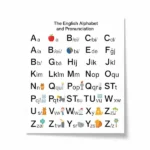
When a student sits down in a classroom for their very first phonics lesson, they are staring at an abstract code of twenty-six squiggles on a page. To an absolute beginner, letters like s, a, t, p, i, and n look like random drawings. My job as an educator is to turn those mysterious shapes into living, breathing sounds that jump off the page.
If you try to teach the alphabet in alphabetical order from A to Z, students stall out. Words like apple or bear have complex, shifting vowel sounds that overwhelm a newcomer. That is why systematic synthetic phonics programs start with a specific, high-utility group of consonants and a short vowel. Mastering alphabet letter sound correspondence early on gives learners the immediate power to build, read, and decode actual words within their very first week of study.
Why Set 1 (s, a, t, p, i, n) Is the Gold Standard
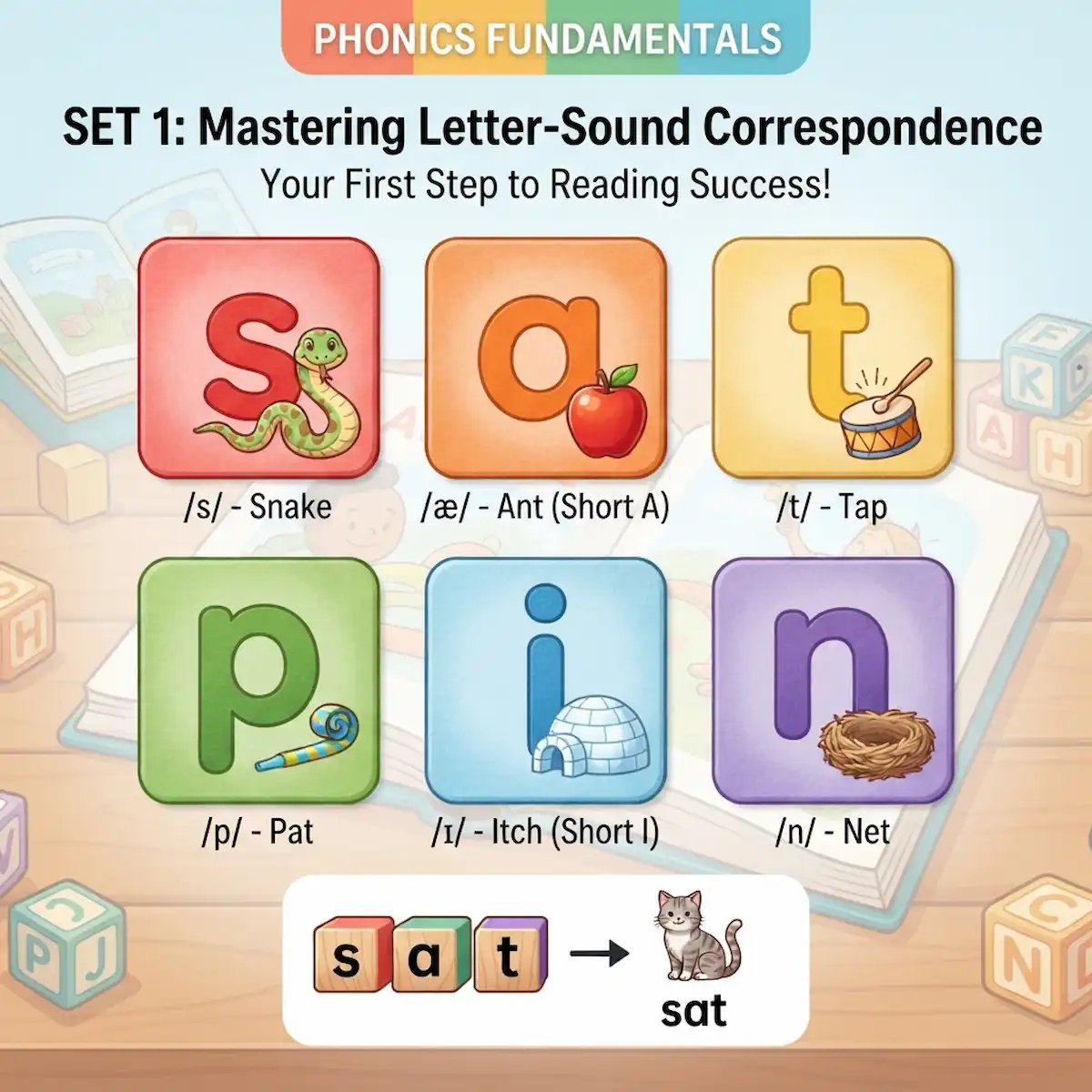
In decades of teaching literacy, I have found that the selection of your starting letters dictates how fast a student builds confidence. Set 1 consists of six specific letters: s, a, t, p, i, n.
Why these six? Because they yield the highest number of simple consonant-vowel-consonant (CVC) words in the English language. With just these six sounds, a learner can immediately construct and read words like sat, pat, tap, pin, pan, sip, and tip.
[s] + [a] + [t] = sat
[p] + [a] + [n] = pan
[t] + [i] + [p] = tip
When students realize they aren’t just memorizing isolated symbols, but actually unlocking a secret code to make real words, their engagement transforms. This foundational phase of alphabet letter sound correspondence sets the cognitive trajectory for all future reading comprehension. Perfecting alphabet letter sound correspondence requires deliberate daily practice, which is why reliable instruction in alphabet letter sound correspondence remains a core pillar of modern pedagogy. For deep dives into systematic phonics frameworks, you can explore research provided by Reading Rockets and methodologies discussed by Shanahan on Literacy.
Detailed Breakdown: The Set 1 Sounds and Articulation
Teaching an absolute beginner requires looking closely at how sounds are formed in the mouth. Let’s break down each letter in Set 1, including mouth mechanics, visual anchors, and common student hurdles.
1. Letter S (s)
- Primary Sound: /s/ (as in sun, snake, sat)
- Mouth Mechanics: Teeth are lightly together, lips are parted in a slight smile, and air hisses gently over the tip of the tongue just behind the upper teeth. It is a continuous, unvoiced fricative sound.
- Teaching Tip: Avoid adding an extra vowel sound at the end. Do not say “suh.” Keep it a clean, continuous hiss like a tire losing air.
2. Letter A (a)
- Primary Sound: /æ/ (Short A, as in ant, apple, pat)
- Mouth Mechanics: The jaw drops wide, the tongue is flat near the bottom of the mouth, and the lips spread slightly.
- Teaching Tip: Many beginners confuse short a with the letter name A. Emphasize that the letter name is “ay,” but the sound it makes in reading is “ah” or “æ.” You can reference foundational early literacy guidelines from the International Literacy Association.
3. Letter T (t)
- Primary Sound: /t/ (as in tap, top, tin)
- Mouth Mechanics: The tip of the tongue taps sharply against the ridge behind the upper teeth (the alveolar ridge) and releases a quick puff of air.
- Teaching Tip: Keep it crisp and unvoiced. Avoid saying “tuh.”
4. Letter P (p)
- Primary Sound: /p/ (as in pat, pin, pot)
- Mouth Mechanics: Both lips press together tightly to trap air, then pop open to release a clean burst of breath.
- Teaching Tip: Hold up a small slip of paper in front of your mouth when making the sound. When you say /p/, the paper should flutter from the burst of air. This visual feedback helps absolute beginners isolate the breath.
5. Letter I (i)
- Primary Sound: /ɪ/ (Short I, as in igloo, itch, sip)
- Mouth Mechanics: The mouth is slightly open, the tongue is relaxed and positioned forward in the mouth, and the lips are neutral.
- Teaching Tip: Short i and short e are notoriously difficult for English language learners to separate. Exaggerate the mouth drop for short i and anchor it with a gesture, like wiggling fingers as if itching an insect bite.
6. Letter N (n)
- Primary Sound: /n/ (as in net, nut, pin)
- Mouth Mechanics: The tip of the tongue presses firmly against the ridge behind the upper teeth while air resonates continuously through the nose.
- Teaching Tip: Have students place their fingers gently on the bridge of their nose or throat to feel the vibration while producing the continuous nasal hum of /n പാർტი/.
Comprehensive Set 1 Reference Charts
To reinforce alphabet letter sound correspondence, visual charts provide structured scaffolding for both teachers and learners.
Chart 1: Set 1 Letter-Sound & Articulation Matrix
| Letter | Primary Sound | Articulation Type | Visual / Keyword Anchor | Mouth Position Guide |
| S | /s/ | Fricative (Continuous) | Snake / Sun | Teeth together, air hissing over tongue |
| A | /æ/ | Short Vowel | Ant / Apple | Jaw dropped wide, tongue flat |
| T | /t/ | Plosive (Stop) | Tap / Tent | Tongue tip tapping alveolar ridge |
| P | /p/ | Plosive (Stop) | Pen / Pig | Lips pressed together, sudden air release |
| I | /ɪ/ | Short Vowel | Igloo / Itch | Mouth slightly open, tongue forward |
| N | /n/ | Nasal (Continuous) | Net / Nut | Tongue pressed to roof, air through nose |
Chart 2: CVC Word Building Matrix (Set 1 Combinations)
Once individual letter-sound mastery begins to take root, learners combine them into decodable words. Here are the core combinations possible using exclusively Set 1 letters:
| Word | Initial Sound | Medial Sound | Final Sound | Blending Path |
| sat | /s/ | /æ/ | /t/ | /s/ – /æ/ – /t/ → sat |
| pat | /p/ | /æ/ | /t/ | /p/ – /æ/ – /t/ → pat |
| tap | /t/ | /æ/ | /p/ | /t/ – /æ/ – /p/ → tap |
| pan | /p/ | /æ/ | /n/ | /p/ – /æ/ – /n/ → pan |
| pin | /p/ | /ɪ/ | /n/ | /p/ – /ɪ/ – /n/ → pin |
| sip | /s/ | /ɪ/ | /p/ | /s/ – /ɪ/ – /p/ → sip |
| tip | /t/ | /ɪ/ | /p/ | /t/ – /ɪ/ – /p/ → tip |
| nit | /n/ | /ɪ/ | /t/ | /n/ – /ɪ/ – /t/ → nit |
Multi-Sensory Practice Activities for Absolute Beginners
Cognitive science and decades of classroom practice demonstrate that multi-sensory engagement cements alphabet letter sound correspondence faster than visual flashcards alone. When students engage tactile, auditory, and kinesthetic pathways simultaneously, neural connections strengthen.
1. High-Velocity Flashcard Drills
Traditional flashcards often fail because teachers show the letter and ask for the name (“What letter is this?”). For early reading, we must invert this habit when teaching alphabet letter sound correspondence.
- The Drill: Flash the card showing lowercase s.
- The Expected Response: The student produces the sound /s/, not the name “ess.”
- Pacing: Keep drills fast-paced—aim for two seconds per card. Use a rhythm: “Flash, sound, next card.”
2. Tactile Tracing in Sand, Salt, or Flour
Fine motor integration helps anchor letter shapes into muscle memory during daily alphabet letter sound correspondence exercises.
- Setup: Place a shallow tray filled with a thin layer of fine sand, colored salt, or cornmeal on the desk.
- Execution: Say a sound aloud, such as /p/. The student repeats the sound, traces the corresponding letter shape in the sand with their index finger, and says the sound again as they finish the stroke.
- Why It Works: The tactile friction provides biofeedback to the brain, reinforcing the link between the physical motion of writing and the phonetic sound.
3. Sound-to-Object Matching Baskets
Concrete manipulation bridges abstract symbols with real-world meaning, proving essential when establishing strong alphabet letter sound correspondence.
- Setup: Gather small toy objects or picture cards representing words from Set 1 (e.g., a toy pan, a toy snake, a picture of an ant, a toy pin). Label six small containers with the letters s, a, t, p, i, n.
- Execution: Have the student pick up an object, say its starting sound aloud (e.g., “Pan starts with /p/”), and drop it into the matching letter container.
4. Body Kinesthetics and Phonics Gestures
Movement engages the whole body, which is especially effective for young learners or kinesthetic adult beginners mastering alphabet letter sound correspondence.
- For s: Weave your arm like a snake and make a continuous /s/ sound.
- For a: Pretend ants are crawling up your arm while making the short /æ/ sound.
- For t: Turn your head from side to side as if watching a tennis match while making a crisp /t/ – /t/ – /t/ sound.
- For p: Pretend to puff out birthday candles while making /p/.
- For i: Pretend to itch an insect bite on your arm while making /ɪ/.
- For n: Hold your arms out straight like airplane wings and make a humming /nnnnnn/ sound.
Classroom Insights & Common Beginner Pitfalls
Over years of guiding absolute beginners through the earliest stages of literacy, I have noticed recurring hurdles that trip up learners. Being aware of these pitfalls will save you hours of frustration.
The Danger of the “Schwa” Addition
The most common mistake educators make is adding an extraneous vowel sound to consonants. When teaching /b/, teachers often say “buh.” When teaching /t/, they say “tuh.”
- The Fix: Keep stop consonants extremely clipped. When teaching /t/, it should sound like a sharp click of breath without any vocal cord vibration or trailing vowel. If a student learns /t/ as “tuh,” blending it into the word cat results in “cuh-ah-tuh”—making decoding nearly impossible. Maintaining pristine alphabet letter sound correspondence prevents this bottleneck entirely.
Confusing Letter Names vs. Letter Sounds
Beginners often freeze when asked to distinguish between the name of a letter and its phonetic sound.
- The Fix: Use explicit labeling language from day one. I tell my students: “Letters have names, just like you do. But letters also have jobs, and their job is to make a sound when we read.” When pointing to the letter A, teach them that its name is “Ay,” but its primary sound in decoding is “ah.”
Cognitive Overload
Trying to introduce too many letters at once causes cognitive shutdown. Sticking strictly to the Set 1 group (s, a, t, p, i, n) limits the variables, allowing the working memory to focus entirely on the mechanics of blending rather than struggling to recall twenty-six different symbols.
Practice Makes Perfect
Here is a PDF worksheet you can download to practice Alphabet Letter Sound Correspondence
Frequently Asked Questions (FAQ)
What order should phonics letters be taught in?
While traditional alphabetic order is useful for dictionary skills, systematic phonics programs introduce letters based on utility and frequency. Starting with high-frequency consonants and short vowels like s, a, t, p, i, n allows learners to begin reading and spelling actual words immediately, reinforcing alphabet letter sound correspondence through practical application.
How long should a daily letter-sound drill take?
Keep sessions short, energetic, and frequent. For absolute beginners, a targeted five-to-seven-minute daily drill using flashcards and rapid-fire sound retrieval yields better retention than a prolonged, exhausting thirty-minute session.
How do I help a student who constantly mixes up short /a/ and short /i/?
Use mouth-shape mirrors. Have the student look in a mirror while pronouncing short a (/æ/) and short i (/ɪ/). Show them that short a requires a wide-open jaw like visiting the dentist, whereas short i is a relaxed, narrower mouth posture. Connecting physical mouth posture to the sound provides an anchor when auditory distinction is challenging.
Conclusion
Mastering alphabet letter sound correspondence is the single most important milestone in an absolute beginner’s reading journey. By focusing intensely on high-utility groups like Set 1 (s, a, t, p, i, n), incorporating multi-sensory tactile activities, and avoiding common pitfalls like schwa additions, you lay a rock-solid foundation for lifelong literacy. Keep your lessons dynamic, celebrate small decoding victories, and watch your learners transform raw symbols into the wonderful world of words.
Additional Helpful Information
Learn more about Phonemic Awareness for Beginners – Phonemic Awareness for Beginners: Training the Ear Before the Eye